Jump to Navigation

Houston, Texas Personal Injury, Insurance Claims, Workplace Injuries Blog

NHTSA Study Highlights Dangers of Drugged Drivers

  • 06
  • February
    2012

Drunk driving has been the major focus of many highway safety campaigns; however, drug impaired driving is also a significant safety concern. The U.S. Centers for Disease Control and Prevention (CDC) and the National Highway Transportation Safety Administration (NHTSA) reported in 2003 that about 18 percent of traffic deaths were linked to drugs other than alcohol. A more recent NHTSA study reveals that drug-related intoxication is more prevalent than previously thought.

In November 2010, the NHTSA published its statistical summary, "Drug Involvement of Fatally Injured Drivers." Reviewing Fatality Analysis Reporting System (FARS) data for the years 2005 to 2009, the federal safety watchdog found that for those drivers fatally injured 18 percent tested positive for drugs in 2009. In hard numbers, nearly 4,000 fatally injured drivers tested positive for drug involvement in 2009. This was a significant increase from the 13 percent reported for 2005.

While these findings were dependent on testing methods and frequency, the numbers could be higher. Some states and territories, including the District of Columbia and Hawaii, did not test fatally injured drivers. Most states tested between 10 to 70 percent of these drivers. Only sister states, Mississippi (98 percent) and Maine (100 percent) tested nearly all of their fatally injured drivers.

Truck Accident at Rail Road Crossing Sparks Federal Investigation

  • 02
  • January
    2012

On June 24 of last year, a semi-truck in Nevada failed to stop in time at a railroad crossing and slammed into a double-decker Amtrak passenger car killing the truck driver, the train conductor, and four passengers. The cause is under investigation, but the National Safety Transportation Board says the railroad safety equipment was working at the time of the truck accident, noting that the intersection in question had "candolevers, lights, crossing gates, a cross bar, markings on the pavement 700 feet back, [and] a sign 900 feet back."

While the evidence shows the big-rig driver did apply the brakes, for some undetermined reason the truck did not stop in time to avoid hitting the train. The trucking company, John Davis Trucking of Battle Mountain, Nevada, has been cited 19 times in the past for various violations, including two wrecks and unsafe driving.

Bill Proposed to Improve Pipeline Safety Sits in U.S. Senate

  • 05
  • December
    2011

Following high-profile oil pipeline accidents in the U.S., Democratic Senators Frank Lautenberg of New Jersey and Jay Rockefeller IV of West Virginia proposed legislation to improve the safety of the pipeline network that crosses the nation. Despite strong bipartisan and industry support, however, the bill has sat in the Senate since early this summer as legislators decide which process the bill should go through.

According to the Courier-Journal, the reauthorization bill contains many new safety provisions for pipelines, including:

  • Higher civil penalties for violation of pipeline safety regulations
  • New civil penalties for obstruction of government investigations
  • New safety regulations for digging near utilities and pipelines
  • New requirements for shut-off valves in new pipelines
  • Increased numbers of safety officials and pipeline inspectors

The safety regulations would continue being administered by the Pipeline and Hazardous Materials Safety Administration, which carries responsibility for overseeing the 2.5 million miles of oil, gas and hazardous materials pipelines throughout the U.S.

Disciplinary Action After School Bus Crash Involving Drunk Police Officer

  • 07
  • November
    2011

Drunk driving accidents that cause serious injury or wrongful death can be particularly difficult for accident victims and family survivors to ever put behind them. Negligence that causes harm is intolerable no matter the circumstances, but drivers who get behind the wheel when they are intoxicated are rolling the dice regarding the safety of other drivers and passengers.

For that reason, Texas lawmakers have enacted tough penalties for drunk drivers, including a recent enhancement of consequences for those who have a high blood-alcohol content (BAC), as well as drivers who cause traumatic brain injuries in committing the felony of intoxication assault. But imagine the frustration if you were involved in an accident with an officer of the law whose colleagues decided to look the other way despite his obvious intoxication.

That was the situation faced by Houston school bus driver Teresa Argueta, who was involved in a crash with off-duty police sergeant Ruben Trejo last spring. Despite Argueta's observation that Trejo smelled of alcohol and had open beer and wine containers in his car, she was the one who was cited (for failure to yield) after the accident.

Vehicle Crashes - Eagle Ford Shale

  • 01
  • November
    2011

"Three oil-field workers were killed Monday morning in a head-on collision south of San Antonio, the third deadly crash within two weeks on a South Texas road officials said has become heavily traveled because of a boom in nearby drilling." The crash happened on Texas 72 near Tilden, Texas, approximately 75 miles south of San Antonio. It is believed that the crash may have been caused by fatigue. "All three fatal crashes - which have killed five people - involved drivers working in the oil and gas fields" according to Texas Department of Public Safety Trooper Clint Walker. "The increase in crashes is likely due to an increase in traffic, Walker said, most of which stems from a boom in drilling in the Eagle Ford Shale formation." It is believed that the three men killed in the crash were from the Rio Grande Valley and were on their way to work. "'We just have so much more traffic because of all the oil and gas activity,' Walker said. 'These guys are working a tremendous amount of hours and not getting enough rest. It's very, very dangerous.'" The rise in energy prices has led to an increase in exploration for oil and gas in the Eagle Ford Shale region in South Texas and other areas in Texas including the Barnett Shale region. Other regions seeing significant land based oil and gas exploration include the Bakken Shale in North Dakota and Montana, as well as the Marcellus Shale in Pennsylvania, New York, West Virginia and Ohio. Houston Chronicle, November 1, 2011.

Pipeline Industry Influence Over Safety Agency

  • 18
  • October
    2011

"Pipeline operators and their trade organizations shaped, managed and provided sizable funding for numerous safety studies conducted by the federal agency that regulates the industry" according to a Hearst Newspaper investigation. The agency is the federal Pipeline and Hazardous Materials Safety Administration which is involved in the development of national and state safety rules and inspection procedures for 2.3 million miles of pipelines that carry natural gas and hazardous liquids throughout the United States, many underneath neighborhoods. The investigation "revealed that two-thirds of the 174 safety studies of land-based pipelines that the federal agency has launched in the past decade were largely funded by pipeline operators or organizations they control." Requirements imposed in 2002 mandate that outside sources pay at least half the cost of the agency's research, which is unlike any other federal regulatory body. "As a result of that practice, the pipeline industry and its allies enjoy virtual veto power over the direction of the agency's research program." Last year, the pipeline safety agency abandoned a critical study because of lack of funding - no pipeline company or trade organization would co-finance the study. The subject of the study was a type of seam weld present in pre-1970 pipelines - a majority of the current inventory (of pipelines) - that is vulnerable to rupture. Houston Chronicle, June 19, 2011.

Pipelines in Texas

  • 17
  • October
    2011

Texas has more pipelines than any other state in the nation. The state has 47,000 miles of natural gas transmission pipelines (large), 103,000 miles of natural gas distribution pipelines (medium), and 51,000 miles of pipelines carrying hazardous liquids. Texas has 25,000 miles of pre-1970 natural gas transmission pipelines, many of which were built with inferior welding standards. Pipeline and Hazardous Materials Safety Administration; Texas Railroad Commission.

Natural Gas Pipeline Explosion - San Bruno, California

  • 17
  • October
    2011

The National Transportation Safety Board stated "the main cause of the natural gas pipeline rupture in San Bruno, California, that killed 8 people and burned 3 dozen houses last September was 54 years of bad management by the Pacific Gas & Electric Company, and state and federal regulators who did not notice the problem." The San Bruno pipeline burned for over an hour after the explosion in part because of difficulty in isolating the location of the rupture. It was determined that "the pipeline ruptured at a spot where utility workers installed bad pipe in1956, skipping half the welds and either not inspecting the finished product or grossly misinterpreting the results." The Safety Board is investigating 4 other pipeline failures. Proposed new pipeline safety rules include installation of valves at shorter intervals, requiring valves be capable of operation by remote control, and stricter rules on corrosion control. New York Times, August 31, 2011.

Cell Phone Ban Urged for Commercial Drivers

  • 14
  • October
    2011

"After a Kentucky truck crash that killed 11 people, top federal safety investigators vastly broadened their recommendations on cellphones....and said all commercial drivers should be forbidden to use them, whether hand-held or not, except in emergencies. The Department of Transportation is already considering a rule to ban the nation's 3.7 million commercial drivers from talking on cellphones; last year it banned them from texting. 'It's just too dangerous,' said Transportation Secretary Ray LaHood."

Safety Efforts to Reduce the Dangers Posed by Large Trucks

  • 03
  • October
    2011

Although fatalities involving commercial trucks decreased significantly between 2004 and 2009, the National Transportation Safety Board (NTSB) is looking for ways to further reduce fatal truck accidents. They are concerned that the downward trend may be due more to the fact that less people drive when the economy is poor and that when the economy picks up again, so may the number of fatalities.

The Obama administration has made several recommendations regarding the improvement of truck and bus safety, including a proposal that would require equipment in trucks that would record the number of hours the driver has been driving. This could possibly cut down on crashes caused by driver fatigue, the reason attributed to nearly 40 percent of accidents involving commercial trucks.

Other proposed recommendations to improve safety include reducing the number of hours a truck driver is allowed to drive, requiring drivers to take breaks after a certain number of driving hours, and requiring drivers to take time off when they reach the maximum number of driving hours allowed per week.

Location

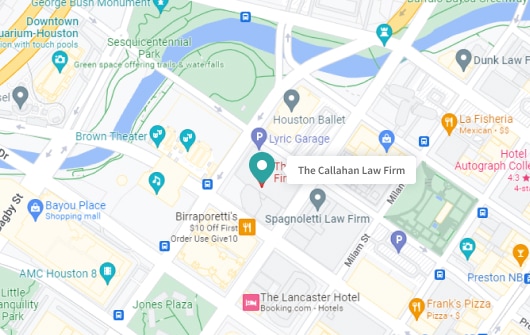
The Callahan Law Firm
440 Louisiana Street, Suite 2000
Houston TX 77002

713-224-9000 / 888-224-7020 - Toll Free
713-224-9001 - Fax
E-Mail Us | Houston Law Office

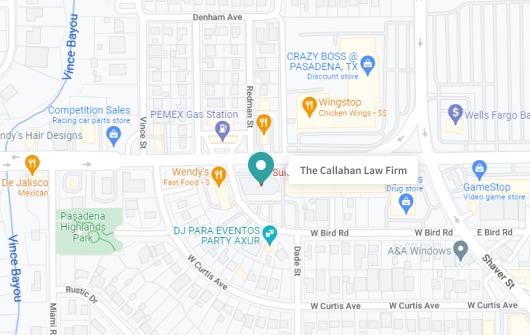
The Callahan Law Firm of Houston represents clients and serves as co-counsel throughout North America, focusing on South Texas, North Texas, West Texas, East Texas and along the Texas Gulf Coast including Harris County, Jefferson County, Brazoria County, Matagorda County, Nueces County, Tarrant County, Dallas County, Denton County, Johnson County, Starr County, Zapata County, Hidalgo County, Cameron County and cities such as Beaumont, Corpus Christi, McAllen, Brownsville, Galveston, Texas City, Port Arthur, Pasadena and La Porte, TX.